Frequently Asked Questions About Orka Sunlife Resort Hotel & Aquapark
September 3, 2026
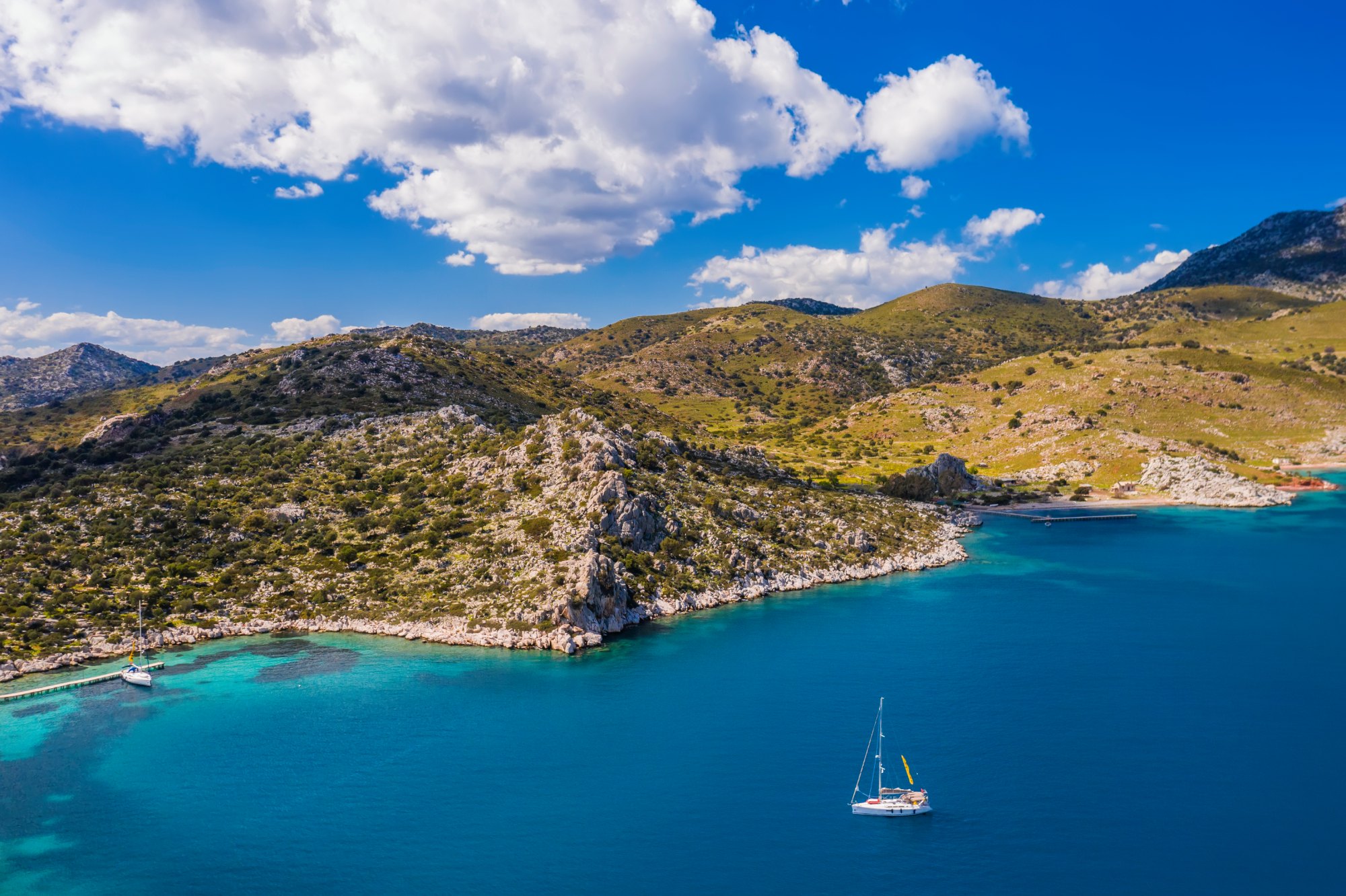
Fethiye’s natural landscape combines a sheltered bay, the Blue Lagoon at Ölüdeniz, the Taurus Mountain range, protected valleys, and a Mediterranean climate that concentrates light and colour across all seasons — making it one of the most visually distinctive coastal destinations in the eastern Mediterranean.
Some places earn their reputation through infrastructure. Fethiye earns its through geography.
The bay is wide and south-facing, sheltered on three sides by the Taurus Mountains and open to the Aegean on the fourth. The result is a microclimate of unusual consistency: warm from April through October, mild through winter, and lit — at all hours — with the particular quality of Mediterranean light that photographers and painters have been attempting to describe for centuries.
Within thirty minutes of Fethiye town, the landscape shifts from sea-level lagoon to 1,960-metre mountain ridge. That compression of elevation and ecology within a small geographic area is what makes the region genuinely exceptional, not merely scenic.
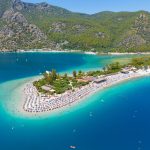
Ölüdeniz translates from Turkish as “dead sea” — a reference not to salinity but to the stillness of the water inside the lagoon. The Blue Lagoon is formed by a narrow sand spit that separates an enclosed, shallow bay from the open Aegean. Motorised vessels are prohibited inside the lagoon area, which is administered as a national park.
The colour of the water is the feature most visitors attempt to photograph and most photographs fail to fully capture. The shade shifts between turquoise, cobalt, and pale green depending on depth, time of day, and the angle of the light. In the early morning, before the main beach opens and the boats begin arriving, the lagoon surface is close to glassy. The light enters at a low angle, and the water responds with a colour that has no precise equivalent in the standard palette.
The beach itself — Belcekız Beach, running adjacent to the lagoon entrance — is one of the most visited in Türkiye. The combination of protected swimming water, paragliding activity overhead, and the Babadağ mountain backdrop creates a visual density that is unusual even for a region accustomed to dramatic scenery.
Babadağ rises directly behind Ölüdeniz to 1,960 metres. Its western face descends sharply to the coast, creating the elevation gradient that makes it one of the premier paragliding launch sites in the world.
The mountain is covered in dense Mediterranean pine forest up to approximately 1,500 metres, above which the terrain opens to rocky scrubland and, at the summit, bare limestone. The contrast between the dark pine canopy below and the pale rock above reads clearly from the beach — a tonal layering that defines the skyline from almost every point in the Ölüdeniz area.
Walking routes reach the summit from the village side, with the ascent taking between four and six hours depending on route and pace. The view from the top encompasses the entire Fethiye bay, the twelve islands, and on clear days the Greek island of Rhodes to the south-west.
For those who prefer to experience the mountain without the climb, the paragliding tandem flights from the summit offer an unobstructed aerial perspective of the entire coastline — the lagoon, the bay, and the islands laid out below in a single, continuous frame. It is, by any measure, a different way of reading the landscape.
Butterfly Valley (Kelebekler Vadisi) sits approximately five kilometres south of Ölüdeniz, accessible by boat or by a challenging descent from the clifftop road. The valley is a narrow gorge — sheer limestone walls on either side, a stream at the base, and a small beach where the gorge meets the sea.
The valley is named for the Jersey tiger moth, a species that inhabits the gorge during summer months in significant numbers. The moist, sheltered microclimate created by the gorge walls supports vegetation that differs markedly from the drier hillsides above — fig trees, wild herbs, and dense reed beds cluster around the stream.
As a landscape, Butterfly Valley operates on a different scale from the open bay. The walls enclose the view, the sound of the sea becomes background, and the temperature drops noticeably in the shade of the cliffs. It is a place that rewards patience and silence.
The Fethiye bay contains a group of small islands — twelve in the traditional count, though the precise number depends on what one defines as an island rather than a rock. These islands, scattered across the southern section of the bay, are uninhabited and largely undeveloped, accessible only by boat.
Day trips from the Fethiye marina visit a rotating selection of the islands, stopping at sheltered coves for swimming and at a small number of sites with historical significance — including Cleopatra’s Bath, a natural pool on one of the larger islands said to have been visited by the Egyptian queen, though the archaeological evidence for this is, charitably, thin.
The islands’ primary value is visual. Seen from the water at low speed, with the mountains behind and the open sea ahead, they constitute one of the most satisfying coastal panoramas in the region. The boat journey itself — threading between the islands as the light shifts through the afternoon — is as much the experience as any single stopping point along the way.
The inland villages above Fethiye — particularly Kayaköy and Faralya — offer access to a different dimension of the natural landscape: dry hillsides covered in scrub oak, ancient olive trees, and the stone walls of terraced fields no longer under cultivation.
Kayaköy sits in a bowl-shaped valley surrounded by pine-forested hills. The ruins of the abandoned Greek settlement occupy the southern slope, with the modern village of Hisarönü to the north. The walk between the two passes through working farmland — vegetable plots, small orchards, and occasionally free-ranging livestock — that provides a context for the ruins that a purely archaeological visit cannot.
The landscape here feels older than the coast. Less curated, less attended to. The light is the same light that reaches the lagoon; the response of the land to it is entirely different.
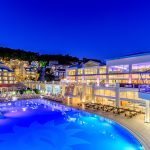
A natural landscape of this quality deserves a base that understands it. Orka Sunlife Resort Hotel and Aquapark is positioned within the Fethiye bay with deliberate attention to the relationship between the resort and its surroundings — the mountains visible from the pools, the sea accessible from the beach, the light that defines the region present in the architecture’s orientation.
Not a hotel that happens to be near the sea. A base built in full awareness of what surrounds it.
The resort’s Ultra All Inclusive concept means that the practical details of a stay — meals, activities, transfers to the beach — are handled without friction, leaving the landscape itself as the primary concern. For those who come to Fethiye to see the place, that matters.
For those searching for Fethiye hotels that offer more than accommodation — where the setting is understood as part of what is being offered — Orka Sunlife Resort Hotel and Aquapark begins from the proposition that the landscape of Fethiye is itself the amenity. Everything else is in service of that.